
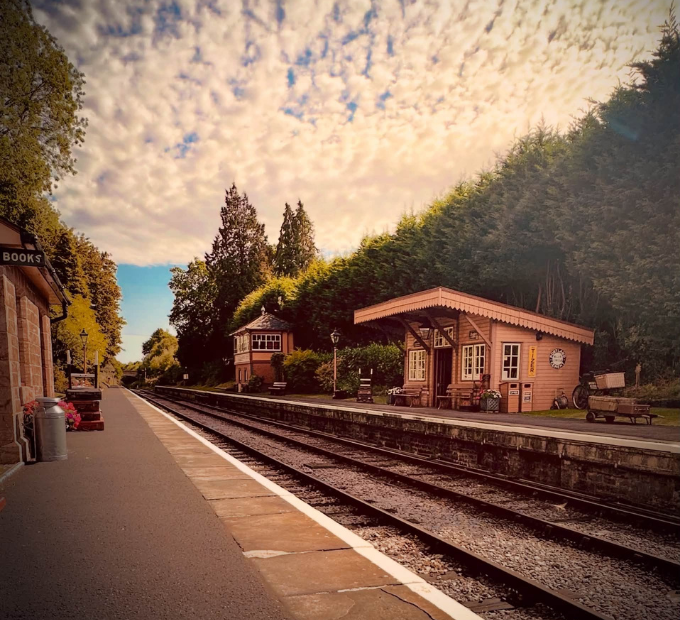
In September 2025, Lizzie, and I set out to house sit over the winter. We liked it so much we continued to sit back-to-back for one year(except for a couple of planned breaks, eg to walk the St James Way). I thought this anniversary was a good opportunity to provide a flavour of our trip.
In the last twelve months, we have completed 27 house sit, covered 2628 miles and have loved taking the time to really explore our home country at our leisure. Despite living in the UK most of our lives, our trip uncovered many novel sights and experiences.
House Sitting
House sitting shaped the nature of our tour around the UK. Looking after the houses, and pets, of hosts while they were away not only provided us with an economical solution for our travelling accommodation, but, more importantly, it also provided the opportunity to immerse ourselves in a locality.
Popping in to support the community shop. Chatting with other dog walkers. Visiting the recommended local pub or restaurant. Joining in with the village carol service or local produce shows. Gossiping with the neighbours on the latest parish controversy. Although only in any one place for weeks at most, we still felt fortunate to be able to reside in a community, and not simply ‘holiday’ there.
House sitting also delivered an exciting level of randomness to our destinations. We knew roughly where we wanted to be and at what times, but the specifics were obviously set by the availability of sits.
By The Seaside
There is something quite unique and, in my opinion, very special about English seaside locations. With few exceptions, they are a mishmash of the faint vestiges of past glories, picturesque surroundings and tacky, but familiar, tourism.
We spent a substantial portion of our year in the popular seaside holiday destinations of Somerset and Devon. That was mostly by design (as I ran a mobile axe throwing experience in those areas over the summer months), but our first seaside location was a more arbitrary choice.

A month-long house sit came up in October 2025 in a small town near Teignmouth, in Devon. We didn’t know the area particularly well and decided to give it a go. The first sit of many on our year long adventure.
Teignmouth is not a major holiday destination, even in summer. It is an unassuming little town, build around its small commercial port, on the corner of the Teign Estuary and the sea.
We regularly strolled along the front beach, passing the classic working pier, and joining the smattering of other walkers on the modest promenade. More often than not we ended up with a warming hot drink at one of the few cafes still open in the off-season.
From there we might take a walk along the sea wall, with the sea on our right and express trains thundering past over the fence on our left. Alternatively, we would head to the estuary beach and take the short passenger ferry ride over to the quaint village of Shaldon, “the best place to eat out” according to our hosts.
We also walked along the scenic coast path to the popular holiday destination of Dawlish, which, even in the autumn, was still busy with visitors. In addition to the usual attractions, restaurants and cafes, Dawlish has an impressive sea defence structure. Looking down on the wall as the sea batters against it (risking the regular drenching from overspilling wave) is a great way to appreciate the wonders of nature.
In contrast, our summer rovings around various fairs and festivals in Somerset were largely spent attempting to avoid the record-breaking extreme heat, in an area we are far more familiar with.
West Somerset, in particular, is a beautiful area stretching from the Quantock Hills to the rolling moorland of Exmoor. Edged by the dramatic coast of the Bristol Channel, it is often overlooked by some holiday makers who bypass it for the pristine sandy beaches of Devon and Cornwall further south.
Rural Rambling
We spent the bulk of our trip exploring the English countryside, in a selection of locations concentrated mainly in the band of south-central counties from Wiltshire through to Cambridgeshire.
The landscape has few hills of any great altitude, with patchworks of agricultural fields, thatched cottages, striking ancient churches, charming regional architecture and all manner of native flora and fauna.
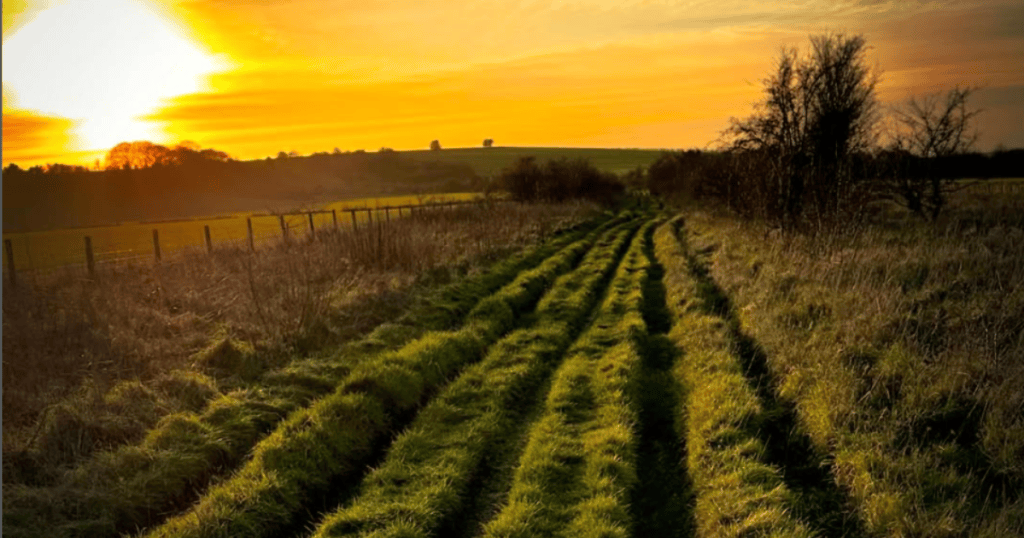
Each village, hamlet or small-holding had its own unique charm. We visited too many places to list each one. but there were common characteristics.
Without exception, we were able to set out on long country walks from our doorstep, usually with one of our canine charges ambling alongside.
There were always plenty of new trails to explore, through muddy fields, alongside pretty flowing streams, underneath canopies of jumbled native trees, or over hills offering soul-nourishing panoramic views of our “green and pleasant land”.
Often our walks would be rewarded with a stop off at a local cafe, serving tea from real teapots accompanied by fresh home-baked goodies.
Sometimes our mid-walk treat would be a country pub, complete with hearty roast dinners and a roaring open fire.
In addition to dogs, many of our rural house sits included chickens to look after (and even a few ducks, sheep and goats), with a daily egg supply in the warmer months. There was also a regular assortment of fruit and vegetable patches to select our dinner ingredients from. It was a novel ‘escape to the country’ experience, which we relished.
Small Town Mooching
We stayed in, or near, many small towns, usually off the tourist beaten track, and discovered some real gems.
Such towns were ideal for our favourite past-time of simply mooching about aimlessly, exploring the junk/antique shops and the cute local attractions and niche museums, and wiling away the hours in tea and coffee shops of all types.
The decline in the retail preeminence of the high street in the past few decades has led to many larger towns looking rather run-down and empty. The smaller English towns have also been affected, but are often able to overcome the challenges by offering more specialist shops and eating places, to draw in locals and visitors alike.
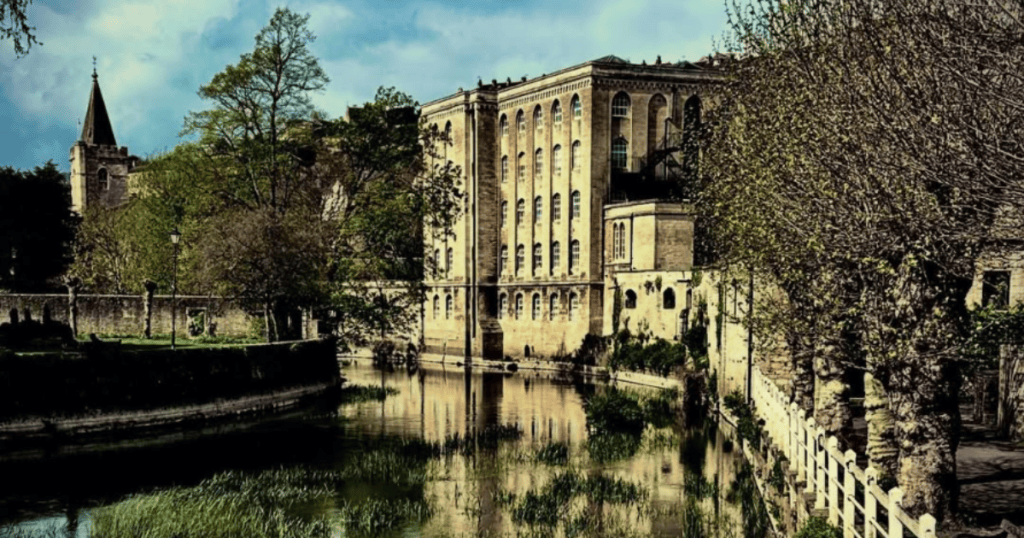
Bradford on Avon, a small town in Wiltshire, is a great example of this.
We stayed near Bradford on Avon, but not knowing anything about it, decided to visit for a short walk, with no great expectations.
It was a pleasant walk in the early summer, through leafy woods, with glimpses of the River Avon and sedate narrow boats on the adjacent canal. Eventually, we passed a National Trust medieval tithe barn and emerged into a small wharf on the edge of the town.
As we strolled down into Bradford on Avon, I was taken aback by the elegant Georgian architecture alongside the river.
It was delightful to find that the Georgian design spread throughout the town centre, which was also crowded with a pleasing selection of independent shops.
We were so glad to have chanced upon this special town and easily spent the day pottering around the shops, museum and waterside.
City Breaks
The joy of house sitting was that one week we might be in a sedate cottage in the countryside and the next in the midst of a bustling city. As much as we liked the charms of the other locations, we also enjoyed the variety and opportunities afforded by the bigger cities.
Scattered throughout our year, we dwelt for a time in Oxford, Cambridge, York, Sheffield, Bristol and Exeter. Each one offered the usual big city draws, like multiple/diverse eating out options, historical sites and architecture, and other social activities and events.
Living in the city as a temporary native also gave us insight into the quirks and highlights of the local neighbourhood. Whether that was discovering a much-loved restaurant nearby, the weekly pub quiz, or the most scenic dog walking routes in the area.

We particularly loved our trip to Sheffield in the late autumn. Our first time in the city happened to coincide with the start of the pre-Christmas celebrations, so the place was particularly buzzing with revellers around the street stalls and entertainments each evening.
I got the impression that Sheffield was a fairly vibrant city all year round though. Certainly the area we were located in, on the edge of the city centre, was a lively mix of eating and drinking haunts, just on the grittier, more authentic side of gentrification.
Apart from the attractions of urban life, Sheffield is also apparently one of the greenest cities in England. (Although, Exeter, another of our favourite stops, is apparently the greenest city).
I can easily believe it. We were spoilt for choice for walks with the array of green spaces on our doorstep. The Peak District National Park was also a short trip out and the perfect place to appreciate the glorious red/brown hues of the late autumn.
The End, or Not
The twelve month marker to our exploration of the UK seemed an opportune time to reflect on our tour and highlight just a small selection of our findings, but we intend to continue house sitting. We have another year of house sitting around the UK planned (excluding a few months in Europe) and are already booked up for most of it. We’re really looking forward to exploring more of our country in slow time.


